



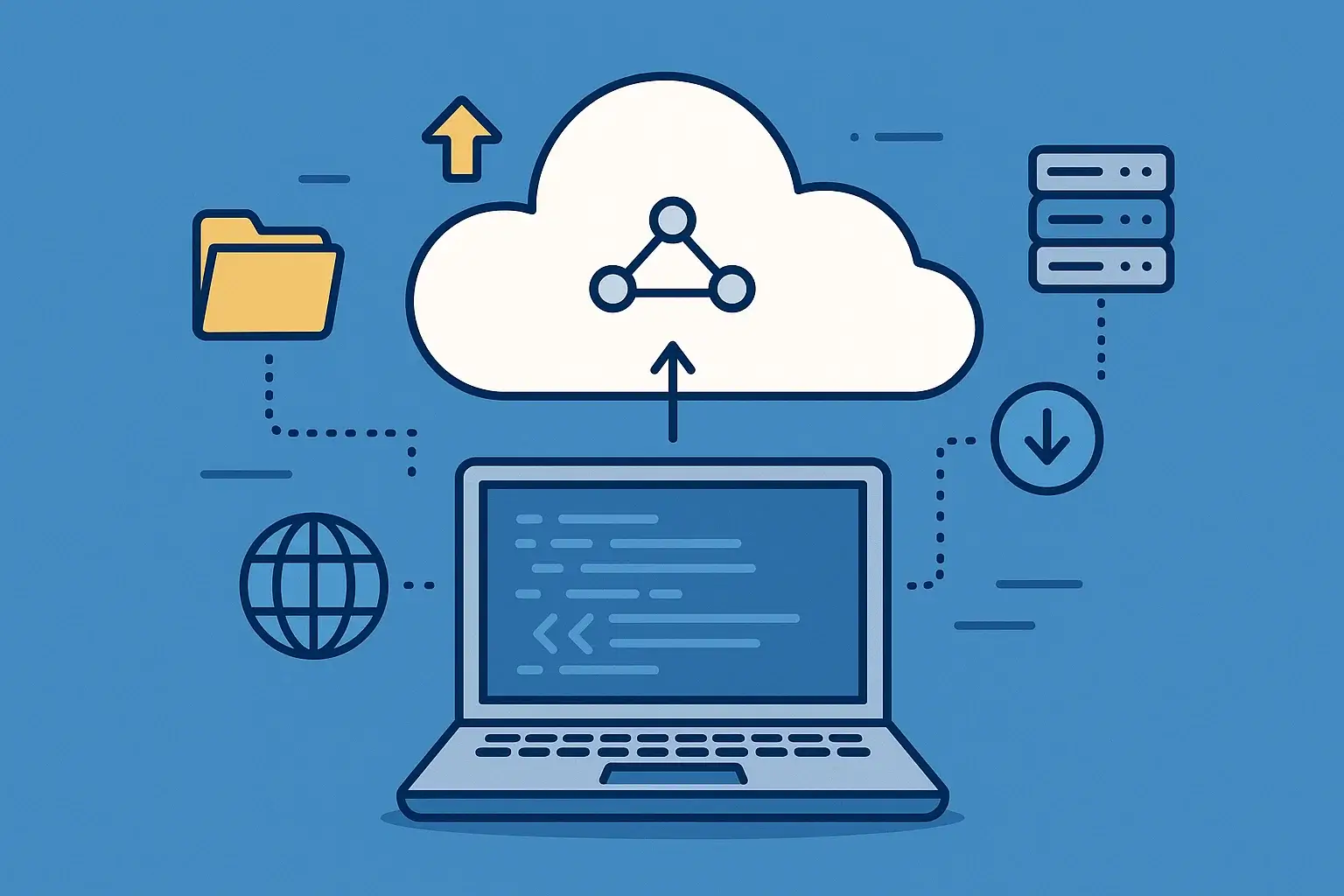
In today’s digital world, cloud computing is more than just a tech buzzword—it’s a foundational technology that powers everything from our favorite apps to major enterprise systems. But what exactly is cloud computing, and why has it become so important?
What is Cloud Computing?
Cloud computing is the delivery of computing services—like servers, storage, databases, networking, software, and more—over the internet (“the cloud”). Instead of owning and maintaining physical servers or data centers, individuals and businesses can access these resources on-demand from a cloud provider such as Amazon Web Services (AWS), Microsoft Azure, or Google Cloud Platform.
In simple terms, cloud computing lets you rent computing power and storage instead of buying and managing it yourself.
How Does Cloud Computing Work?
Cloud computing works through virtualization, which allows a physical server to be split into multiple virtual machines. These virtual resources can be accessed remotely through the internet. Users can scale services up or down depending on their needs—paying only for what they use.
Cloud services are generally categorized into three main models:
- IaaS (Infrastructure as a Service): Offers basic computing infrastructure like servers and storage. Example: AWS EC2.
- PaaS (Platform as a Service): Provides a platform for developers to build, test, and deploy applications without managing the underlying infrastructure. Example: Google App Engine.
- SaaS (Software as a Service): Delivers software applications over the internet. Example: Gmail, Microsoft 365, Dropbox.
Types of Cloud Deployment
Cloud services can be deployed in different ways depending on the needs of the user:
- Public Cloud: Services are delivered over the public internet and shared across organizations.
- Private Cloud: Used exclusively by one organization. It can be hosted on-premises or by a third party.
- Hybrid Cloud: Combines public and private clouds, allowing data and applications to move between them for greater flexibility.
Benefits of Cloud Computing
Cloud computing offers numerous advantages:
- Cost Efficiency: No need to invest in expensive hardware. Pay only for what you use.
- Scalability: Easily scale resources up or down based on demand.
- Accessibility: Access your data and applications from anywhere with an internet connection.
- Security: Leading cloud providers invest heavily in security, often offering more robust protections than traditional in-house systems.
- Automatic Updates: Systems and software are updated automatically, ensuring you always have the latest features and security patches.
Common Use Cases
Cloud computing is everywhere. Some everyday examples include:
- Streaming services like Netflix and Spotify
- File storage through services like Google Drive or Dropbox
- Hosting websites and applications
- Big data analytics and machine learning
- Backup and disaster recovery solutions
Cloud computing is transforming how we live and work. Whether you’re an individual storing personal photos or a company running global applications, the cloud offers unmatched flexibility, reliability, and scalability. As technology continues to evolve, cloud computing will only become more integral to our digital lives.

Hi, this is a comment.
To get started with moderating, editing, and deleting comments, please visit the Comments screen in the dashboard.
Commenter avatars come from Gravatar.